I would like to thank the follow for their help in this project: The William Leech Research Fellowship committee for their funding provision. The staff of St John’s College, Durham, for their administrative support. Prof. Mathew Guest, Drs Sarah Dunlop, Liz Graveling, Andrew Orton, Sam Tranter, and researchers Hannah Rich and Joe Warton for their […]
Foreword
The William Leech Research Fund has been delighted to fund this research, which addresses its aims of engaging with people and churches in the North East, developing understanding and reflection on issues that matter to them, and creating wider impact. We particularly value the space and opportunity that Ruth’s research has given for the respondents’ […]
Bibliography
Aisthorpe, S., The Invisible church: Learning from the Experiences of Churchless Christians (Edinburgh: Saint Andrew Press, 2016) Arnett, J.J., Emerging Adulthood: The Winding Road from the Late Teens through the Twenties (Oxford: OUP, 2016) Barna, Five Factors Changing Women’s Relationship with Churches Report, (2015), http://www.barna.com/research/five-factors-changing-womens-relationships-with-churches/ (accessed 03.09.25) Bible Society, The Quiet Revival (2025), http://www.biblesociety.org.uk/research/quiet-revival/ (accessed […]
Concluding Reflections
Undertaking this research has, once again, been humbling and inspiring. Researchers are supposed to be objective; however, as someone who has invested in Millennial Christian faith for more than 25 years, my overwhelming response is one of pride in these resilient disciples. Many of their peers have walked away from faith, but, despite the challenging […]
6. Millennial Faith and Purpose

The underlying altruism persists, albeit more pragmatic and tempered than in earlier years. One of the themes that has emerged throughout two decades of the researcher’s ministry and research into Millennial Christians is a deep-seated altruism. It began as a youthful zeal to “change the world for Jesus” and motivated many to take a ‘gap […]
5. Millennials and Church

As reported in the introduction, 93% of those surveyed reported attending church at least once a month. This section explores the perspectives Millennials hold towards church: the joys and challenges, reasons for changing congregations or becoming de-churched, regional differences, and experiences in church leadership. Millennial values and church engagement Much has been written in the […]
4. Faith and Friendships

Faith formation during adolescence, early, and emerging adulthood is widely acknowledged to be significantly shaped by friendships, and devout religious university students often develop strong, and sometimes exclusive, relational networks.[1] This section examines whether these patterns continue into established adulthood for Millennial Christians. It is set against the backdrop of what has been described as […]
3. Millennial Faith and Parenthood (or not)

A recurring theme among participants was how their demanding lifestyles were impacted by and affected their spiritual lives – particularly for the two-thirds who were parents. Theresa likened her family’s routine to “Being on a bicycle, cycling. As long as we keep pedalling it works!” Juggling multiple responsibilities – particularly with young children – had […]
2. How Faith Helps

A wide body of research indicates that religious beliefs can have positive effects on wellbeing. Recent data demonstrates that British churchgoers report lower levels of anxiety and depression compared to non-churchgoers, that younger churchgoers have more social connections than their peers, and they are more likely to participate in social activism.[1] Those who participated in […]
1. Maturing Millennial Faith
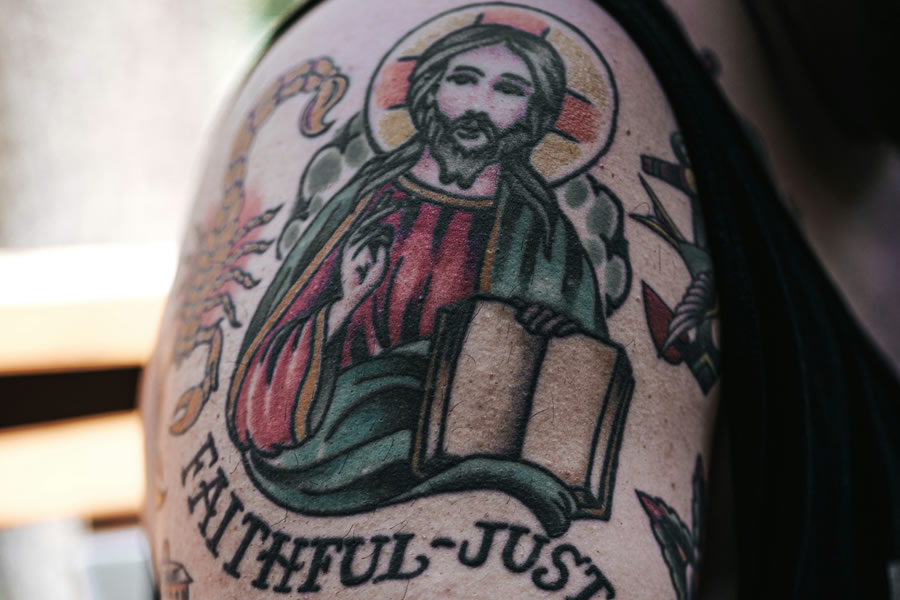
British Millennial Christians are a small religious minority in the British population. As teenagers, this generation was often labelled as “memoryless” in relation to basic Christian beliefs.[1] By 2019, 70% of Britons aged 18-30 identified as having no religious affiliation,[2] and only 5% were regular churchgoers prior to the pandemic.[3] It’s important then, in secular […]
© 2025. This work is openly licensed via CC BY-NC-ND 4.0
Resilient Faith
These findings are drawn from a 2-year project exploring the shape and impact of their religious faith on Millennial Christians living in Northeast England.
1. Maturing Millennial Faith:
The desire to follow Jesus
2. How Faith Helps:
The desire for hope and a future
3. Faith and Parenthood (or not):
The desire for family
4. Faith and Friendship:
The desire for deep connection
5. Millennials and Church:
The desire for community
6. Faith and Purpose:
The desire to bring about change
Buy the Book
About the Author
 Canon Dr Ruth Perrin has been in Christian ministry with young adults for 25 years. For 20 of those, she has also researched their faith. She is currently a research fellow and free-church tutor at St John's College, Durham, an associate staff member at King's Church Durham, member of the theological advisory group for the UK Evangelical Alliance, and ecumenical canon at Durham Cathedral. Her publications include - Searching for Sisters (Grove B42); The Bible Reading of Young Evangelicals (Wipf & Stock, 2017); Changing Shape; the faith lives of Millennials (SCM 2020); and the Finding Jesus Report (EAUK, 2025). Ruth is involved in preaching, teaching, and training across the UK church and beyond.